Join conferences and webinars where we share insights on distributed SQL, database migrations, and modern architectures.
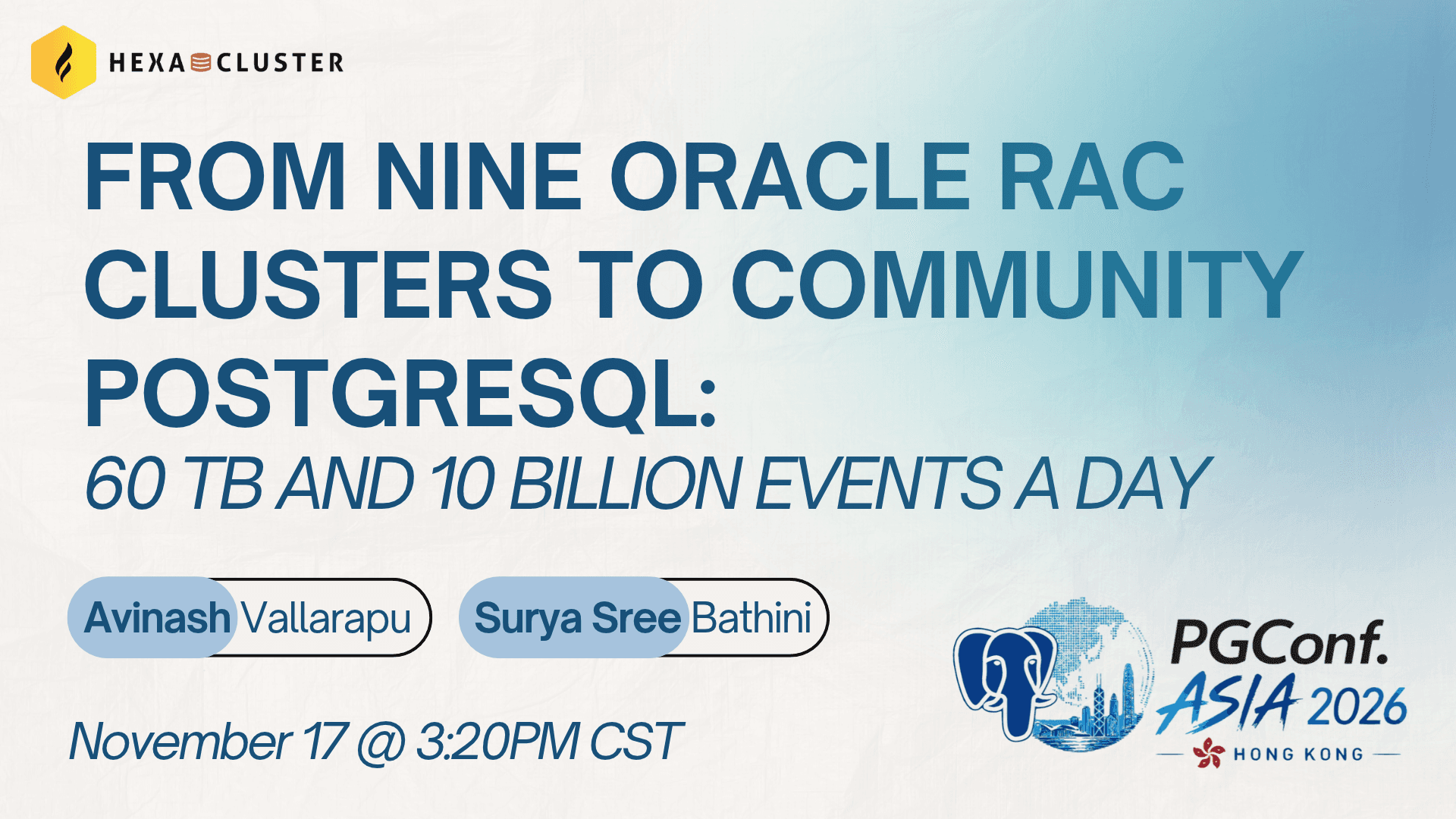
November 17, 2026 • Hong Kong
A real-world journey migrating nine Oracle RAC databases (60 TB, 10 billion events daily) to fully open-source Community PostgreSQL. Explore architecture, high availability, backup and recovery, application-level MVCC challenges, and how the project was delivered in eight months with no user-visible downtime.
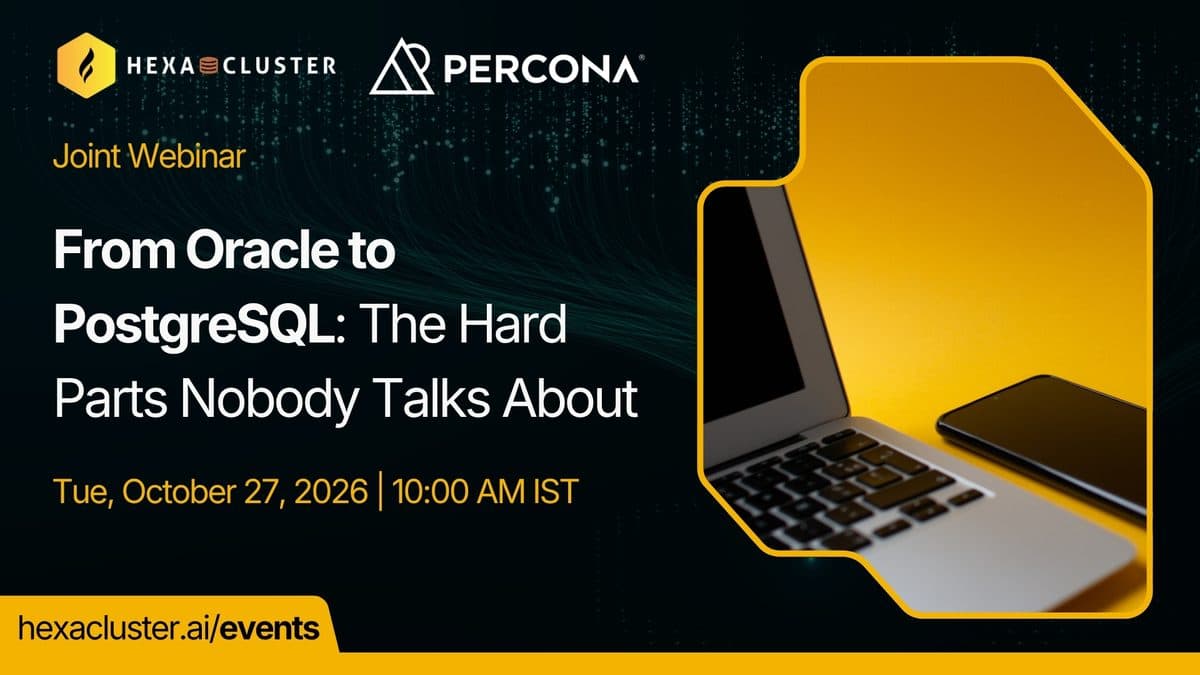
October 27, 2026 • Online
Joint webinar with Percona on the challenges of moving from Oracle to PostgreSQL that rarely make it into migration plans, and how to address them for a successful modernization.
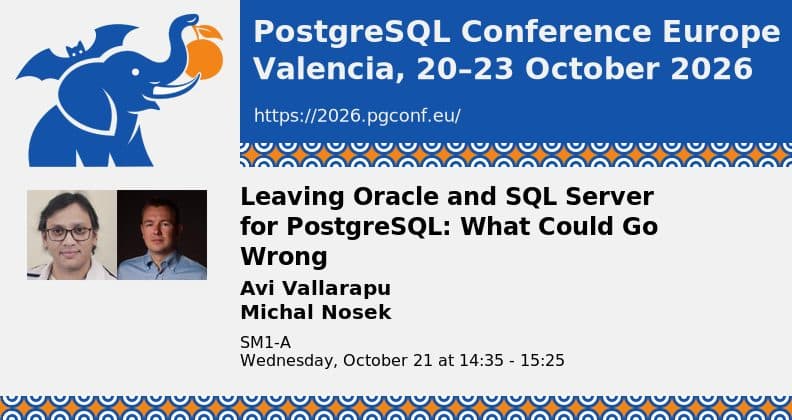
October 21, 2026 • Valencia, Spain
Migrating from Oracle or SQL Server is about much more than moving the database: it is tied to applications, data models, integrations, operational processes, and years of database-specific decisions. This session helps attendees understand migration scope, identify compatibility gaps, evaluate the application changes required, and decide whether the cost savings justify the effort.
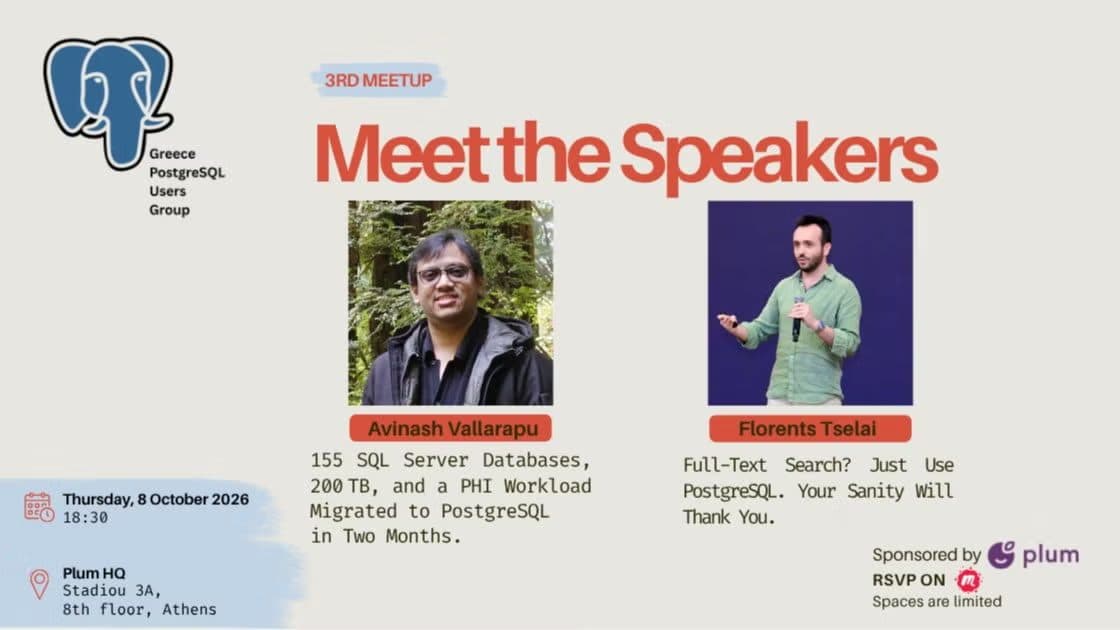
October 8, 2026 • Athens, Greece
At the 3rd official Greece PostgreSQL Users Group meetup, Avinash Vallarapu, CEO and Chief of Products at HexaCluster, shares how a large estate of 155 SQL Server databases (200 TB) including a PHI workload was migrated to PostgreSQL in two months. The evening also features a talk on full-text search in PostgreSQL by Florents Tselai, followed by networking.
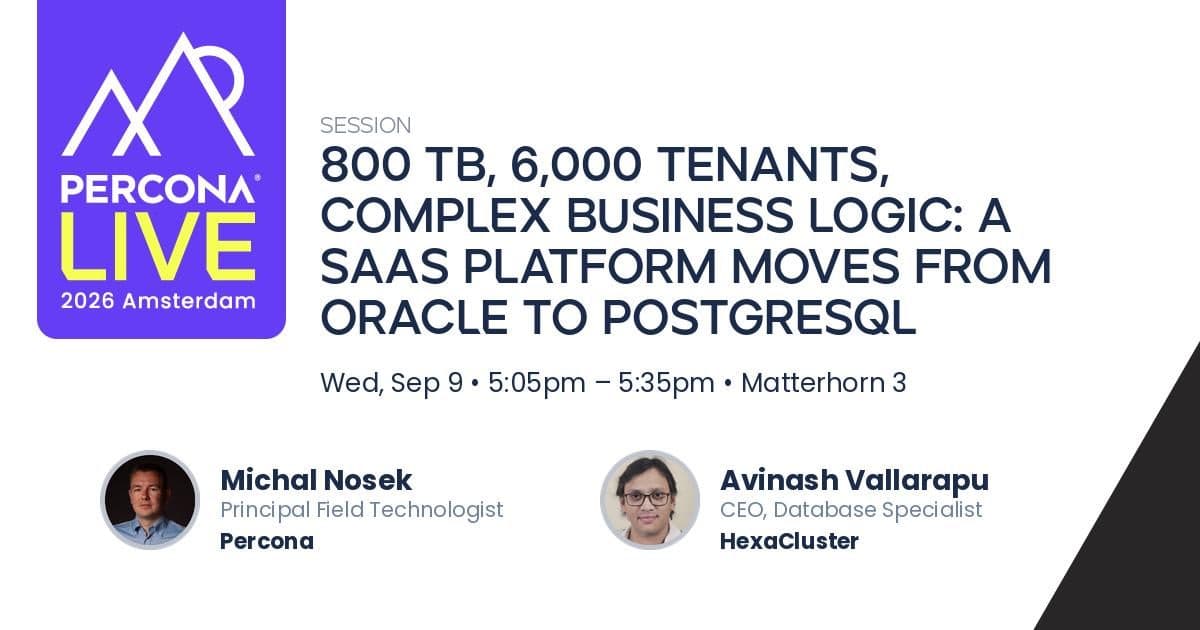
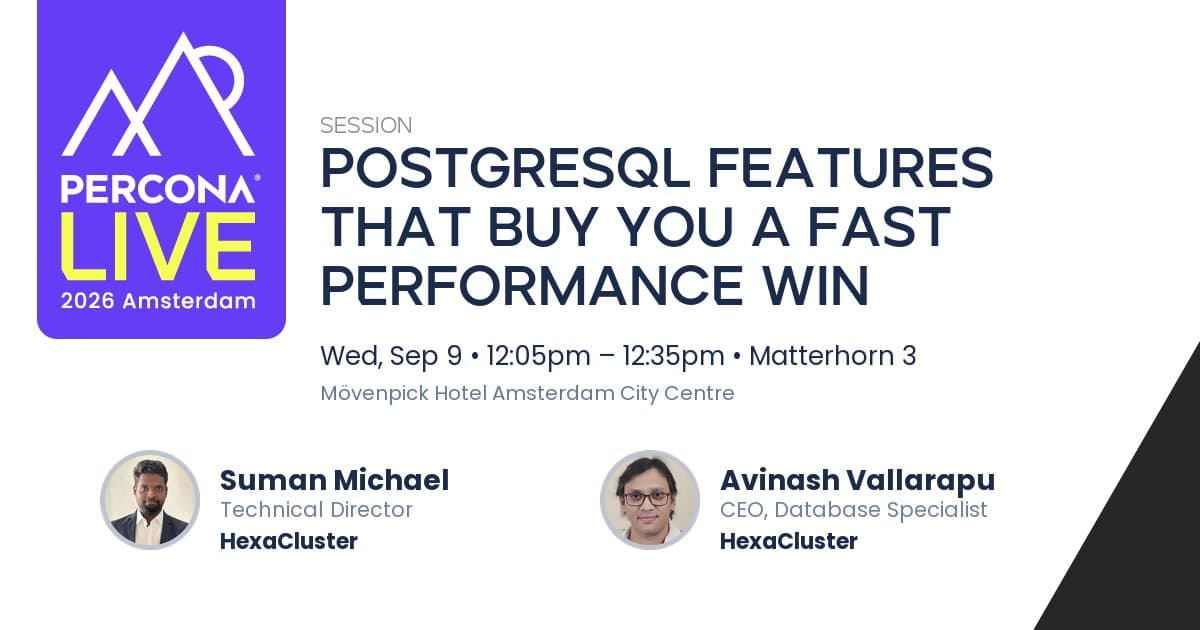
September 9, 2026 • Amsterdam, Netherlands
This session explores migrating an 800 TB, multi-tenant FinTech platform from Oracle to Amazon Aurora PostgreSQL. It covers discovering tenant complexity, sequencing 6,000 tenants, converting tenant-specific PL/SQL, per-tenant validation, production concurrency challenges, Aurora performance optimization, and lessons from an inaccurate migration estimate.
A session exploring PostgreSQL performance optimization using built-in features that require minimal effort but deliver substantial gains, covering tuning parameters, index-only scans, extended statistics for correlated columns, partition pruning, parallel query execution, JIT compilation, and HOT updates with fillfactor optimization, plus a prioritized checklist ordered by return on effort.