
While migrating from Oracle or SQL Server or other databases serving legacy Applications, to PostgreSQL, one of the interesting thoughts we witnessed is the Leadership decision for a Technology Stack Upgrade. What this means is that the leadership is planning to transform the entire Application stack built on outdated technology to a modern technology stack, for simplifying development efforts and provide a better Customer experience. Some of such requirements may lead to a Microservices and a Micro-frontend architecture.
At HexaCluster, we not only excel in Database and Application migrations, we are also experts in UI/UX. There were multiple scenarios where our Customers approached us for Oracle or SQL Server to PostgreSQL migrations, and resulted into modernizing their Technology stack involving both Backend as well as Frontend. HexaCluster is proud to be the only PostgreSQL company supporting such transformations involving Database, Backend and Frontend transformations.
Imagine building a complex Web application supporting multiple independent services, where different teams can develop and deploy features independently, all seamlessly integrating into a single user experience. This is where Module Federation comes in, a new concept in frontend development that lets teams create and add their own components independently.
A quick Architecture Audit can save hours of troubleshooting later.
Try it Now!Let HexaRocket simplify it - migrate smarter, faster, and stress-free.
Contact us Today!HexaRocket performs end-to-end database migrations and replication seamlessly between Oracle, SQL Server, MySQL, MariaDB, and PostgreSQL.
Try Today!In this blog post, we will explore the concept of micro-frontends, their benefits, Module Federation and types of Module Federation.
Micro-Frontend is a development approach where a web application's front end is divided into smaller, self-contained modules. Each module can be developed, tested, and deployed independently, enabling teams to work on specific features or functions within the application.
Instead of making one big website, we break it down into smaller pieces, each responsible for a specific part, like a header, navigation menu, or content section. These smaller pieces, or micro-frontends, can be developed independently by different teams using different technologies. Once ready, they're assembled together to create the complete website. This approach makes it easier to manage and scale large web projects because each part can be updated or replaced without affecting the rest of the site.
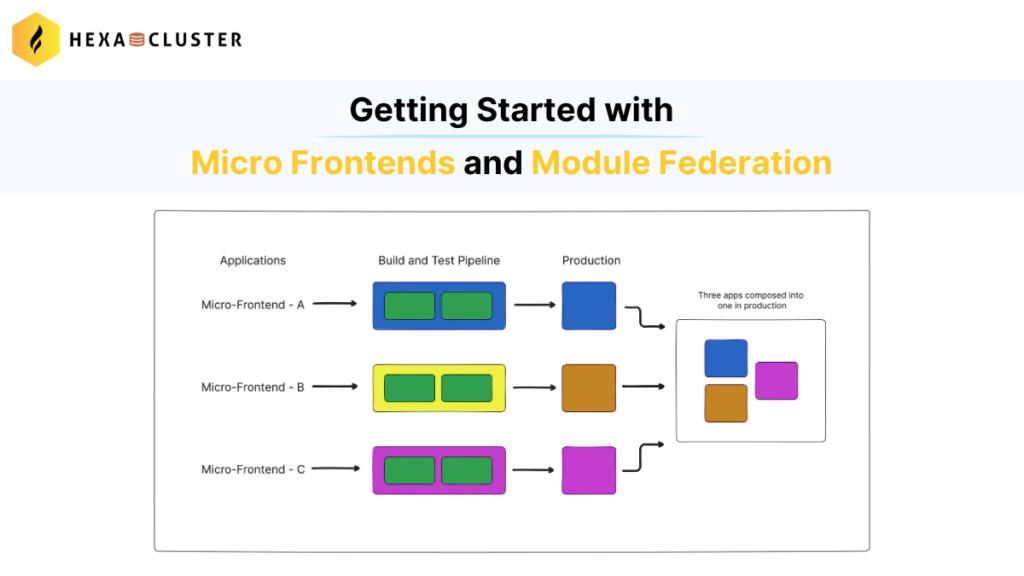
According to Micro-Frontends.org:
“The idea behind micro frontends is to think about a website or web app as a composition of features which are owned by independent teams. Each team has a distinct area of business or mission it cares about and specializes in. A team is cross-functional and develops its features end-to-end, from database to user interface”.
Decentralized Development and Deployment Teams independently develop and release their sections of the app. This makes updates quicker and more frequent.
Technology Neutrality Each team selects their preferred tools. This allows them to use what works best for them.
Scalability As the application evolves and expands, new micro-frontends can be added as needed, allowing the application to scale both vertically and horizontally without significant architectural changes.
Simplified Updates and Maintenance Breaking the app into smaller parts makes it easier to fix problems. It also helps implement changes without disrupting the whole system.
Component Reusability Teams can reuse parts of the app in different places. This ensures consistency and saves time.
Enhanced Testing Testing each part of the app separately ensures that everything works before integration.
Concurrent Development Multiple teams can work on different tasks simultaneously. This speeds up the overall development process.
Fault Tolerance If one part of the app breaks, the rest can continue to function until the issue is resolved.
Let us see some popular frameworks and techniques to develop micro-frontends.
Flexibility: Enables teams to choose different frameworks for individual micro-frontends, promoting technological freedom.
Simplified Integration: Handles complex tasks like routing, lifecycle management, and communication between micro-frontends, streamlining development.
Efficient Code-Splitting : Breaks down code into smaller, manageable chunks, reducing initial load times and improving performance.
Shared Dependencies : Allows micro-frontends to share dependencies and resources, minimizing redundancy and bundle sizes.
Benefits: Lightweight, promote code reusability, and enable a more modular UI development process.
Limitation: Communication between web components can be more complex to implement compared to other techniques.
A quick Architecture Audit can save hours of troubleshooting later.
Try it Now!Let HexaRocket simplify it - migrate smarter, faster, and stress-free.
Contact us Today!HexaRocket performs end-to-end database migrations and replication seamlessly between Oracle, SQL Server, MySQL, MariaDB, and PostgreSQL.
Try Today!Module Federation is a method in which code can be split into smaller deployable modules that can be shared and consumed at runtime between applications.
This method allows for the development of Micro Frontends which can reduce coordination between teams and allow for a faster development cycle with each team adhering to its own release cadence.
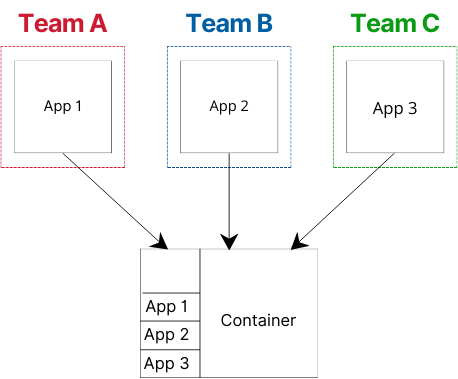
Module Federation
| Subscribe to our Newsletters and Stay tuned for more interesting topics. |
Runtime Code Sharing: Module federation excels at sharing code dynamically at runtime.
Reduced Bundle Size Each micro frontend only downloads the code it needs, minimizing duplication and improving initial load times.
Automatic Updates When a shared module is updated, all dependent micro frontends benefit from the update automatically without requiring individual deployments.
Sharing UI Components: Micro frontends can share UI components across the application, promoting code reuse and consistency.
Framework Agnostic: Micro frontends can be built using different frameworks (React, Vue, Angular) within the same application, enabling team autonomy and utilizing the best tool for each specific micro frontend.
We have two types of Module Federation.
1. Compile Time Module Federation
2. Run Time Module Federation
Ultra-Fast Build Times: Turbopack promises exceptional build speeds, potentially surpassing other bundlers like webpack. This can be beneficial for projects requiring quick development cycles.
Focus on Simplicity: Turbopack emphasizes a streamlined build process, possibly reducing configuration complexity.
Rspack is known for its blazing-fast build times, especially when compared to webpack.
Rspack excels at creating smaller, more optimized bundles for your micro-frontends.
Micro-frontends and module federation are transforming web development. They address the challenges of managing large projects by breaking them into smaller, more manageable parts. This not only speeds up development but also encourages collaboration among team members, who can independently work on different sections.
Furthermore, module federation ensures seamless integration between these micro frontends, maintaining a smooth user experience across the application. Users can navigate between sections without any interruptions, enhancing usability and satisfaction. Looking ahead, as technology progresses, adopting micro frontends and module federation will be essential for remaining competitive in the digital landscape. These practices enable developers to create scalable, flexible, and adaptable web applications that meet changing requirements and user needs.
However, it's important to know that micro-frontends architecture might not suit every project. Understanding what they're meant for and using them in the right way is really important.
Subscribe to our Newsletters and Stay tuned for more interesting topics.

Udaykiran is a Software Developer at HexaCluster with 1.5+ years of experience building fast, scalable web applications. He works across the full stack, crafting modern frontends using Next.js, React, TypeScript, and micro-frontends, and powering them with robust backend services built with Node.js, Spring Boot, and Golang. With hands-on experience in microservices architecture, he builds modular, production-ready systems end to end.
Start your migration journey 🚀
start your migration journey with our expert team
Database & Application Migration Assessment Tool
End-to-End Database Migration & Modernization Tool
Database Code Object Conversion to PostgreSQL
MyBatis Mapper Conversion to PostgreSQL
Enterprise Data Replication & Live CDC
Oracle Compatibility Layer for PostgreSQL